1. Delicious death and humble humiliation
    Date:
    Authors:
    james k.a. smith
    Publications:
    indie – yale university
    Formats:
    JSON · Markdown

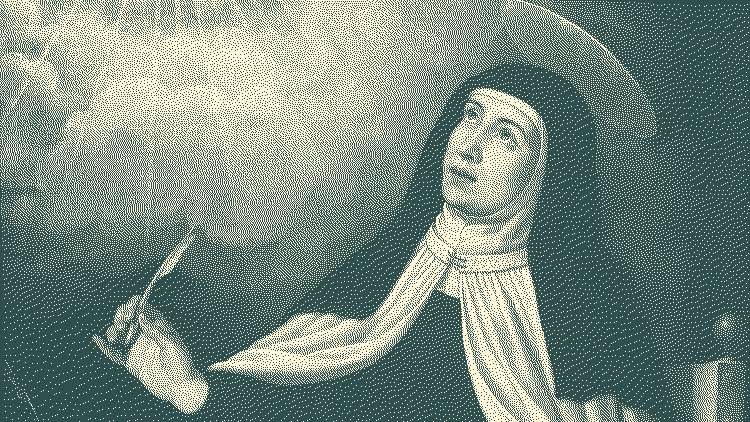
    St. Teresa of Ávila St. Teresa of Ávila.

    One more quotation from James K.A. Smith's Make Your Home in This Luminous Dark:

    In contrast, the mystics describe an experience of unknowing that rocks the very foundations of confidence in knowledge. What follows is a humility that St. John of the Cross describes as a “humiliation.” St. Teresa describes it as an experience of “annihilation.” In describing “the Prayer of Union,” [St. Teresa of Ávila] cautions: “Don’t think that this union is some kind of dreamy state.” It is, rather, an experience of utter vexation. It is a kind of death. “Even if she is able to love, she does not understand in the midst of her loving how or what it is she loves. She doesn’t know what she wants. She has died completely to this world so that she can fully live in God. This is a delicious death.”

  2. Drawing a larger circle

    Date:
    Authors:
    james k.a. smith·john frederick kensett·richard rorty
    Publications:
    indie – yale university·indie — university of virginia
    Topics:
    god etc.
    Formats:
    JSON · Markdown

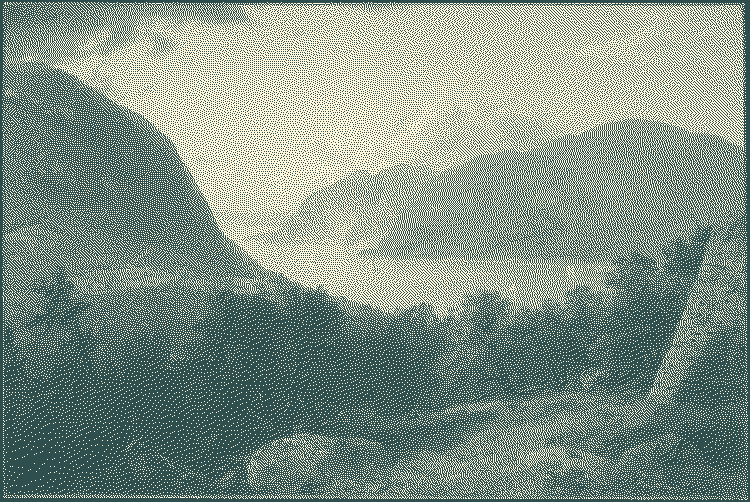
    Hudson River Scene "Hudson River Scene" by John Frederick Kensett, here.

    Speaking of theology and James K.A. Smith's book, Make Your Home in This Luminous Dark, he writes:

    To think with a philosopher like Hegal is, in a sense, to wade into a luminous dark. I see the difficulty of his philosophy now as the fruit of someone wrestling with complexity that eludes analysis. I love it even more for its inscrutability, in that sense.

    I'm reminded of the Richard Rorty, who writes in Philosophy as Poetry:

    Hegel, Heidegger, and their admirers hope to change not only your intuitions but your sense of who you are, and your notion of what it is most important to think about. To use Emerson's language, they are trying to draw a larger circle—trying to lure their readers out into as yet uncharted spaces. … If you stop at each sentence and pause to ask yourself whether it has been backed up with a sound argument, you will never finish their books. To get through their books, you must temporarily suspend disbelief, get into the swing of the story that is being told, pick up the jargon as you go along, and then decide, after having given the entire book the most sympathetic reading you can, whether to move out into uncharted space.

    I think Smith—or at least the mystics he writes about—would push us beyond uncharted space, into the thing that isn't even space, something beyond knowing. But Smith also discusses those a-rational logics that Rorty is pointing at here—the kind that live, un-ruled, in our experiences rather than our intellects.

  3. The beautiful face of hunger

    Date:
    Authors:
    james k.a. smith·natalie carnes
    Publications:
    indie – cascade·indie – yale university
    Topics:
    god etc.
    Formats:
    JSON · Markdown

    In his new book on, among other things, Christian mysticism, Make Your Home in This Luminous Dark, James K.A. Smith gives us this quotation from Natalie Carnes's book, Beauty, where she summarizes Gregory of Nyssa thusly:

    What is the difference between a person who sees the beauty of a flower or a statue and the person who can also see beauty on the face of the hungry? ... Only the one wounded by love can see the beauty of the Wounded one who chose to be bound to the wounded of this world ... To see the beauty of the wounded is to see the beauty of our own wounded selves and to see the way the Wounded one is healing those wounds by turning them into openings for greater dependence on one another and on Christ, which is to say, on Love.